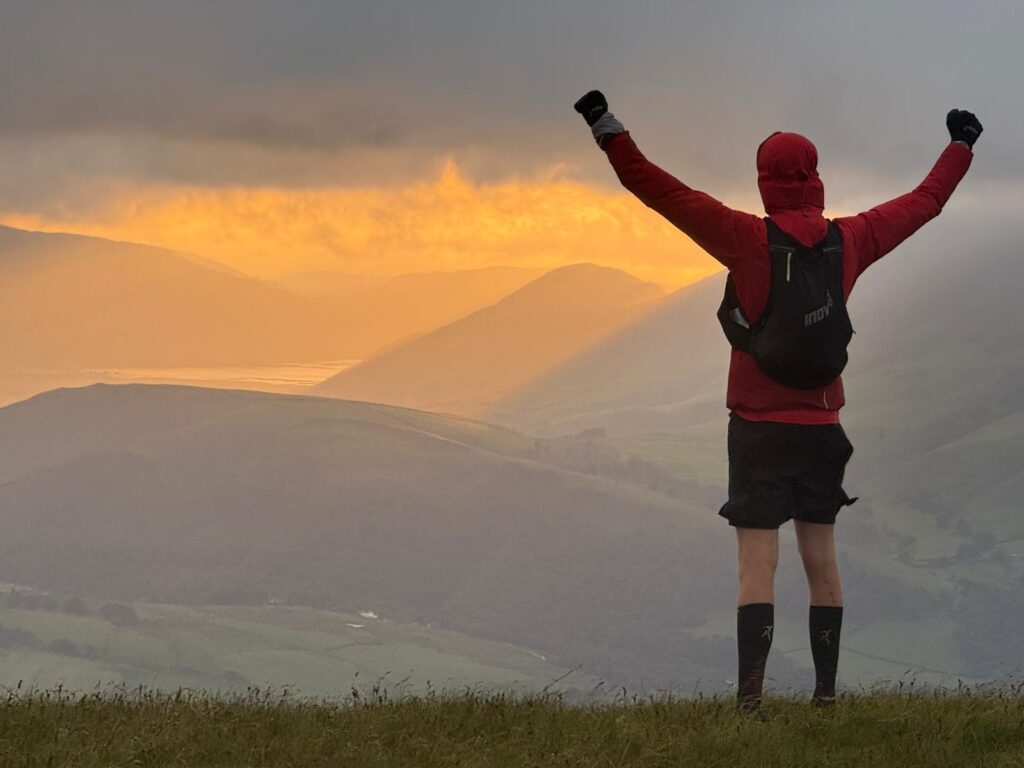
10 Lessons from Running Every Mountain in England & Wales In One Go
10 Lessons from Running Every Mountain in England & Wales In One Go
You’re possibly sick of the self-development gurus telling us how to be the best version of ourselves in 2026: as if we were somehow rubbish and inadequate in 2025.
However you feel about 2025; now is a great time to slow down and reflect.
As things wind down it’s finally awarded me the opportunity to reflect on a major highlight this summer: running all 446 mountains in England & Wales, and cycling between them, in a record time of 45 days for Mind Over Mountains.
I’m working on a third book which will share this in more detail, but for now I wanted to share the key things I learnt in hope they help you as you plan the year ahead.
1) Stop waiting for the perfect moment:
I recently found the 446 Challenge concept on my 2019 goal plan but ‘life kept getting in the way’. This year, on my 30th birthday, it felt like the stars were aligned. I was ready. But ultimately, the crucial step is commitment: blocking out the calendar, turning down work and assembling the team. Carpe diem.
2) Plan for afterwards, not just the event:
I was so focused on getting to the start line and getting the thing done that I neglected the bit afterwards, where I felt incredibly empty and isolated. I’m still processing this now. Plan the recovery period with the same level of detail and intention, before motivation is depleted and you don’t want to do the things you need to do.
3) Raise the bar high enough: but not too high:
The previous record was 6 months, but I couldn’t take 6 months off work. I was also motivated by the idea of going as fast as possible. The original estimate from project manager Dan Beaumont was 65-70 days which felt ‘too easy’. We eventually agreed on a target of 45 days. Even in the final few days I deliberated reducing this to 44 because ‘I had too much left in the tank’. After thunderstorms, missing a mountain and struggling to find a guide for Pillar Rock: I was very grateful we didn’t, with a penultimate 38-mile run to finish on schedule. Always make space for the unexpected.
4) Take it one mountain at a time:
I was worried about everything from the climb up Pillar Rock, to the military firing range of Warcop, to the ever-present threat of injury or health problems. At one point my doctor friend came out to check me over. As usual, the things we worry about distract us from the real issues: heatwaves, rolled ankles, weather, my girlfriend fainting whilst I was on Cross Fell, bent derailleurs and more. Deal with each step, day and mountain at a time.
5) Do the right thing:
Near the end of the challenge I managed to miss the true summit of a mountain, Bannerdale Crags, by 100 metres or so. I only realised at the end of a very long day in heatwave temperatures. Would anyone notice or care? Ultimately, I wouldn’t have been able to sleep with a clear conscience six months later. So I went back up. People are always watching us, so how we show up matters. (Politicians, take note…)
6) Trust the process:
Within the first two weeks I managed to pull my hamstring on Aran Fawddwy. I was reduced to a painful hobble. Logic would say game over. But a sports masseur confirmed it wasn’t torn, so it was a case of doing what we could do to keep moving forward. Experience told me that I’d been here before and that there’s always a way: unless we want to find a way out.
7) You will never feel fully ready:
Balancing speaking events, training, coaching training, fundraising and logistics was never going to be optimal. There’s no training plans for 45 consecutive days. I tried to simulate them with consecutive long mountain runs and hill reps up Helvellyn. But getting to the start line feeling healthy and (fairly) relaxed is far more important: trust the body and mind will do the rest.
8) Focus on the job, delegate the rest:
Find the right people who truly believe in the mission, not just tag along for the ride. Having a brilliant remote ‘base camp’ and motorhome team allowed me to focus on running and cycling and recovering. Every minute I finished late was a minute less recovery, which had a knock-on effect on every subsequent day. I protected this time fiercely (even being very anti-social) and it never felt like enough.
9) The law of impermanence:
Whether I woke up in the motorhome, perpetually knackered, with torrential rain or glorious sunshine outside – I still had to get up and go anyway. But nothing lasts forever: even the good days. Embrace them regardless and remember that a lot can change in a week, day or hour. As my good friend Hems de Winter often says “Stuff happens, and everything changes!”
10) Enjoy the ride:
During the challenge you crave the mundane things without time pressure. Afterwards, you miss the purpose of the adventure and the simple existence. Sometimes I was so busy trying to post on social media for donations (and I hate reels) or liaising with the team or sponsors that I wasn’t truly taking in the moments for myself. Hopefully the book will do a better job of reliving it…
What are you planning for 2026? What would you do if nobody was watching?
Please do get in touch if you’re looking for a speaker or performance coach to help you or your team to achieve a record-breaking 2026.
Wishing you a resilient Christmas and happy New Year!